
How To Bath Your Dog Outside
How to Bathe a Dog Outside: A Simple, Stress-Free Guide
Bathing your dog outdoors keeps the mud, mess and wet-dog smell out of the house — and done right, it's calmer for your dog too. Here's exactly how to do it, step by step.

Outdoors is the easiest place to wash a muddy dog — no bathroom to clean up afterwards.
Washing your dog outside is genuinely the easiest way to do it — no mud up the stairs, no hair round the bath, no soaked bathroom floor. The trick is just getting a few things right so it's quick and calm rather than a wrestling match.
This guide walks through the whole thing: what you need, how to set up, the right water temperature, and a simple step-by-step that works for most dogs. No special skills required.
In a hurry? The single biggest factor is warm water — cold hose water is what makes most dogs panic. If you want the easy way to get warm water outside, you can skip to the showers here. Otherwise, read on.
What You'll Need
- A brush — to get loose hair and mud out before water turns it to sludge.
- Dog shampoo — never human shampoo; it's the wrong pH for a dog's skin.
- A warm water source — the most important item, and the one most people skip.
- Two or three old towels — plus a drying coat if you have one.
- A non-slip mat — old bath mat or rubber mat, so they feel steady underfoot.
- Treats — to keep it positive and reward calm behaviour.
- Somewhere to secure them — a helper, a lead, or a fixed point so they can't bolt.
Step 1: Pick Your Spot and Timing
Choose a sheltered part of the garden, out of the wind, on a mild day where possible. Avoid bathing in full cold so your dog doesn't get a chill afterwards. A patio or a flat, non-slippery surface is ideal — dogs hate feeling like their feet are sliding, and a wobbly footing is half the reason they panic.
Tie them off or have a helper hold them so they can't make a break for it mid-lather. Have everything within arm's reach before you start — shampoo open, towels ready — so you're never leaving a wet dog to go and fetch something.
Step 2: Get the Water Temperature Right
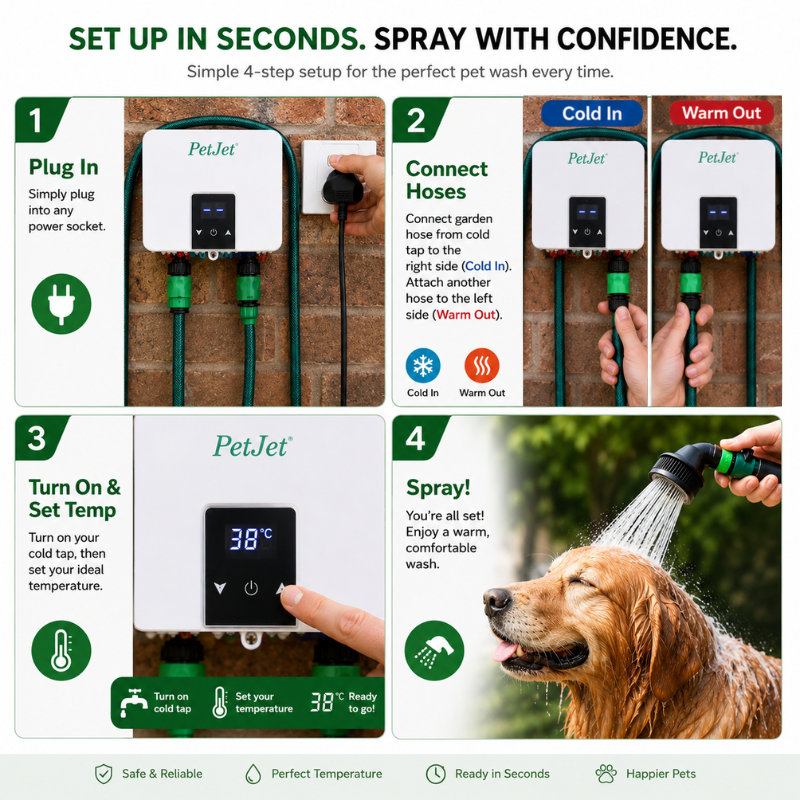
This is the step that makes or breaks the whole thing. A garden hose or outdoor tap runs cold — roughly 8–12°C in the UK, colder in winter. That's genuinely unpleasant for a dog to stand under while you work shampoo into their coat, and it's the number-one reason dogs squirm, shake and try to escape.
Aim for around 25–35°C — comfortably warm on the inside of your wrist, like you'd test a baby's bottle. Warm water relaxes a dog; cold water frightens them. Get this right and most of the "my dog hates baths" problem simply disappears.
Step 3: Brush First, While They're Dry
Give them a quick brush before any water touches them. It lifts out loose hair, grit and dried mud — which otherwise turns to a paste that's far harder to rinse and clogs everything up. Thirty seconds now saves you real time later.
Step 4: Wet From the Neck Back — Never the Face First
Start at the shoulders and work along the body, down the legs, and toward the tail. Keep the water off the head and face for now. Most panic moments start with water going in the eyes, ears or up the nose, so leave the head until the very end and use a damp cloth for it instead.
Step 5: Lather, Then Rinse Properly
Work the dog shampoo into a lather along the body, getting into the legs, belly and under the tail. Then rinse thoroughly — more thoroughly than you think. Leftover shampoo is the main cause of itchy, flaky skin afterwards, so rinse until the water runs completely clear.
Use a gentle, steady flow rather than a hard blast, especially around sensitive areas. For the head, wipe gently with a damp cloth and clean carefully around (not inside) the ears.
Step 6: Towel Off Straight Away
Get a towel on them before they shake — a brisk rub stops them flinging water everywhere and starts warming them up. A drying coat or a second dry towel helps them finish off comfortably. On a cool day, keep them moving or indoors somewhere warm until they're properly dry.
Step 7: Finish on a High
End with a treat and lots of praise. A calm, warm, quick bath that ends well teaches your dog that bath time isn't something to dread — and within a few washes, most dogs stop running for the hills when they see the towels come out.
Tips for Nervous Dogs
- Keep sessions short and calm — you can always finish another day.
- Let them sniff and investigate the kit before you start.
- Use warm water and gentle pressure; never a sudden cold blast.
- Reward heavily, early and often — treats for simply standing still.
- Stay relaxed yourself; dogs read your tension instantly.
Common Mistakes to Avoid
- Cold water. The single biggest cause of a stressful bath.
- Human shampoo. Wrong pH — can dry out and irritate their skin.
- Spraying the face first. Start at the body; do the head last.
- Under-rinsing. Shampoo residue causes itching and flaking.
- Bathing too often. Over-washing strips natural oils; a warm rinse after muddy walks is fine, but a full shampoo only every few weeks unless needed.
How to Bathe a Dog Outside — Quick Questions
How often should I bathe my dog?
A full shampoo bath every 4–6 weeks suits most dogs. Between baths, a quick warm rinse after a muddy or sandy walk is fine as often as needed — it's just water and won't strip their coat.
What water temperature is best?
Around 25–35°C — comfortably warm on the inside of your wrist. Cold hose water is the main reason dogs find bathing stressful.
Can I bathe my dog outside in winter?
Yes, as long as the water is warm and you dry them thoroughly afterwards and keep them warm until fully dry. Warm water outdoors is far kinder than a freezing hose.
What can I use to get warm water outside?
A plug-in unit that warms a cold hose, or a wall-mounted unit fed from an indoor sink, are the easiest no-fuss options. You can see a few warm-water dog showers here.
Do I need special shampoo?
Use a dog-specific shampoo suited to their coat and skin. Avoid human shampoo, which has the wrong pH and can cause irritation.